

A chess problem solvable by intuition but not by computers

Collapse
X
 
  • Filter
  • Time
  • Show
Clear All
new posts

  • Paul Bonham
    replied
    Re: A chess problem solvable by intuition but not by computers

    Originally posted by Mathieu Cloutier View Post
    .... There's nothing about cracking the secrets of human ingenuity there. Just a simple, drawn position, which all modern engines will play correctly for both sides. Penrose saying that this position fools even supercomputers is more like Penrose trying to fool gullible people. Many false statement in that article on the Telegraph.

    Before I respond to Mathieu, I have a question about this problem that no one has brought up yet:

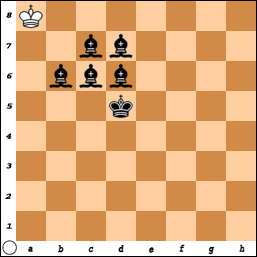
    Why does it require 3 dark-square Bishops for Black? Why don't 2 Black dark-square Bishops suffice to demonstrate the problem? Perhaps Wayne Komer, in your analysis, you have found something that indicates Black does require all 3 dark-square Bishops?

    Now to Mathieu:

    You are misunderstanding the point. You say "all computer engines will play correctly for both sides." That isn't the issue here. The issue is whether ANY computer engine will ASSESS correctly this position. And what Penrose says about that is that for any engine to ASSESS the position correctly, would require more computer resources than exist on planet Earth.

    Penrose isn't "trying to fool gullible people". What a ridiculous assertion.

    Human beings, even far below GM strength, even below Master strength, can asses this position correctly in a very short time. The reason they can do this is because their brains act in a neural net fashion (and by the way, in everything I've seen on this problem including the Telegraph article, no one has yet mentioned the term "neural net" -- very surprising). This means that humans of reasonable chess strength have fully understood the rules of chess, including the 50 move rule. When a human chess player sees this position and understands that only the Black Bishops can move, and cannot cover any light squares, and the White King can simply meander among the light squares, they reach the conclusion: that means 50 move rule.

    But chess engines are not programmed to reach any such conclusion. All chess engines are brute force / minimax search engines (although perhaps there are some unknown neural net engines out there that are "in training"). Chess engines are programmed to find best move. Their assessment of a position is a result of doing a minimax search of the move tree, unless the engine is told to use endgame tablebases.

    For any chess engine to determine that 50 move rule comes into play: since it is told nothing about past moves, it means 50 moves per player have to transpire with no captures / pawn advances for the engine to asses 50 move rule applies. 50 moves per player means 100 plies, and a 100 ply search where just the 3 dark-square Bishops can move for Black would most likely require, if using pure minimax algorithm, as Pensrose said, more computational resources than exist on Earth.

    But wait... somewhere in this thread, Egidijus Zeromskis made this point:

    "Thus we left with White king and three Black bishops to dance around for a 50 moves rule. That's in a principle 4 piece tablebase. Should be solve-able for a decent computer in a blink (with proper programming)"

    Very good point, Egidijus. But there's a remaining problem: normally a chess engine only uses tablebases in the endgame phase! This position does NOT represent an endgame phase... although it could, if you had a heuristic for that which I mentioned in a previous post. But somehow, you the author of the chess engine code have to tell the engine when to use tablebases. And guess what: the possible times when that can occur is totally unpredictable. The number of heuristics you'd have to code into that engine to tell it when to switch from a minimax search to using tablebases is beyond comprehension.

    The only type of chess engine that can possibly emulate the workings of the human brain is a neural net chess engine. I'm surprised that Penrose (at least in the Telegraph article) doesn't mention that. And such a neural net engine would't just automatically know what to do. It has to be trained, just as the human brain has to be trained since childhood to play chess.

    So despite what Mathieu says, there is a difference here. This problem does demonstrate human ingenuity versus the rigid inflexible workings of all typical computer chess engines. And let's not forget: the same human who recognizes in 5 minutes or less that this position is a draw.... can in the same day go out and win a tennis match using totally different thinking and totally different functionality.. Try that, computer chess engine!
    Leave a comment:


  • Mathieu Cloutier
    replied
    Re: A chess problem solvable by intuition but not by computers

    Yes, that's the one. The trick happens around move 180, when Rybka is fooled into giving back a couple of pawns in order to avoid the 50 moves rule while up two exchanges. However, the resulting pawn march from black is both unstoppable and outside the search horizon of the engine.

    It has to be noted that more recent engines don't fall for that trick. But even then, that was a pretty nice trick. After that, Nakamura treated himself to quite a few dozen moves of absurd chess torture. Can't blame him, though. It was some payback for all these games he lost against the same engine.

    And finally, I must say I agree with you that analyzing that position is more interesting than doing income tax.
    Last edited by Mathieu Cloutier; Wednesday, 15th March, 2017, 11:53 PM.

    Leave a comment:


  • Wayne Komer
    replied
    Re: A chess problem solvable by intuition but not by computers

    A chess problem solvable by intuition but not by computers

    March 15, 2017

    Alas Mathieu, I think you are right. In two days I haven’t done a line of my income tax return worrying about the position.

    I wonder if this is the Nakamura game you were thinking of?

    The Five Bishops Ending

    ICC blitz 3 0
    Internet Chess Club
    March 15, 2008
    Rybka Computer – Nakamura, Hikaru
    A00 Grob’s Attack

    1.g4 d5 2.h3 h5 3.g5 g6 4.d4 Bg7 5.Nc3 c6 6.Nf3 Bf5 7.Nh4 e6 8.Nxf5 exf5 9.Bf4 Ne7 10.e3 O-O 11.Qd2 Nd7 12.O-O-O Re8 13.Bg2 Nf8 14.Be5 Ne6 15.f4 Nc8 16.Kb1 Nd6 17.Bf1 Qd7 18.a4 b6 19.Ba6 Nc7 20.Be2 a6 21.Bd3 b5 22.h4 Ne6 23.Ne2 Re7 24.Ka1 Ree8 25.Qa5 Nb7 26.Qd2 Nd6 27.Rh2 Bf8 28.Rf2 Ng7 29.a5 Nb7 30.Ng1 Qd8 31.b4 Qd7 32.Nf3 Nd6 33.Bxd6 Bxd6 34.Ne5 Qb7 35.Kb2 Rac8 36.c3 Re7 37.Be2 Ree8 38.Bf3 Re7 39.Qc2 Rd8 40.Rfd2 Bb8 41.Be2 Re6 42.Bd3 Re7 43.Rf2 Re6 44.Qd2 Re7 45.Rg1 Re6 46.Rff1 Re7 47.Qd1 Re6 48.Rg2 Re7 49.Qc2 Re6 50.Rfg1 Re7 51.Rf2 Re6 52.Qe2 Re7 53.Qf3 Re6 54.Rd2 Re7 55.Rgd1 Re6 56.Qg3 Re7 57.Kb1 Re6 58.Bc2 Re7 59.Nd3 Re6 60.Nc5 Qc8 61.Nxe6 Qxe6 62.Kb2 Re8 63.Re1 Qd7 64.Qf3 Re7 65.Bd3 Re8 66.Rg2 Re7 67.Kb3 Re8 68.Ra2 Re7 69.Rc1 Re8 70.Rca1 Re7 71.Rg1 Re8 72.Rh2 Re7 73.Qg3 Re8 74.Ka3 Re7 75.Rb1 Re8 76.Rd2 Re7 77.Kb3 Re8 78.Ra1 Re7 79.Kb2 Re8 80.Re2 Re7 81.Ree1 Re6 82.Qf3 Qe7 83.Qf2 Qe8 84.Be2 Qe7 85.Bd1 Qe8 86.Bf3 Qe7 87.Qd2 Qe8 88.Kb3 Qe7 89.Kc2 Qe8 90.Kb2 Qe7 91.Rab1 Kf8 92.Qf2 Ke8 93.Be2 Kd8 94.Bd3 Qe8 95.Qf3 Ke7 96.Kb3 Kf8 97.Ra1 Qe7 98.Bc2 Kg8 99.Kb2 Qe8 100.Qf2 Qe7 101.Qd2 Qe8 102.Bd3 Qe7 103.Be2 Qe8 104.Rad1 Qe7 105.Rc1 Qe8 106.Bf3 Qe7 107.Qf2 Qe8 108.Rcd1 Qe7 109.Be2 Re4 110.Bd3 Qe6 111.Bxe4 fxe4 112.Ra1 Nf5 113.Kb3 Kf8 114.Rh1 Ke8 115.Rh2 Kd7 116.Qe1 Kd8 117.Rd1 Kd7 118.Rc2 Kd8 119.Qf2 Nd6 120.Ka2 Qf5 121.Rh1 Kd7 122.Qg3 Ke6 123.Qh3 Ke7 124.Qxf5 Nxf5 125.Rh3 Ke6 126.Kb3 Bc7 127.Re2 Bb8 128.Re1 Bc7 129.Ra1 Bb8 130.Rd1 Bc7 131.Re1 Bb8 132.Re2 Bc7 133.Rg2 Bb8 134.Rg1 Bc7 135.Rb1 Bb8 136.Rbh1 Bc7 137.Rg1 Bb8 138.Kb2 Bc7 139.Kc2 Bb8 140.Kd2 Bc7 141.Rh2 Bb8 142.Rc1 Bc7 143.Ra1 Bb8 144.Ke2 Bc7 145.Rg1 Bb8 146.Rhh1 Bc7 147.Kd2 Bb8 148.Rc1 Bc7 149.Rh3 Bb8 150.Ra1 Bc7 151.Rhh1 Bb8 152.Rae1 Bc7 153.Rh2 Bb8 154.Rh3 Bc7 155.Ra1 Bb8 156.Kc2 Bc7 157.Rf1 Bb8 158.Kb3 Bc7 159.Rf2 Bb8 160.Kc2 Bc7 161.Rg2 Bb8 162.Kd2 Bc7 163.Rh1 Bb8 164.Rf2 Bc7 165.Rfh2 Bb8 166.Rd1 Bc7 167.Rf1 Bb8 168.Re1 Bc7 169.Ke2 Bb8 170.Rh3 Bc7 171.Kd2 Bb8 172.Kc2 Bc7 173.Rb1 Bb8 174.c4 dxc4 175.Kb2 Bd6 176.Ka3 Ne7 177.Rb2 Nd5 178.Rg3 Kf5 179.Rb1 Be7 180.Rh3 Bd6 181.Kb2 Be7 182.Re1 Bxb4 183.Re2 Bxa5 184.Kc1 Bb6 185.Kc2 a5 186.Rh1 a4 187.Kc1 a3 188.Rc2 Ba5 189.Rh3 Bb4 190.Re2 Bd6 191.Re1 b4 192.Kb1 b3 193.Rh2 c3 194.Rc2 Bb4 195.Ka1 bxc2 196.Ka2 Nxe3 197.Kb3 Kxf4 198.Rc1 c5 199.dxc5 Bxc5 200.Rh1 Kg3 201.Ra1 Kxh4 202.Rc1 Kxg5 203.Rg1+ Kf4 204.Rh1 g5 205.Ra1 h4 206.Rc1 h3 207.Kxc3 g4 208.Kb3 g3 209.Ka4 g2 210.Kb5 Bd4 211.Ka6 Bb2 212.Ka7 Bxc1 213.Kb7 Bb2 214.Kb8 h2 215.Kb7 f5 216.Kb6 Ke5 217.Kc6 f4 218.Kb5 f3 219.Kb6 a2 220.Kb7 f2 221.Kc8 f1=B 222.Kb7 g1=B 223.Kb8 h1=B 224.Kb7 c1=N 225.Kc6 a1=B 226.Kd7 Nd5 227.Ke8 Ne7 228.Kxe7 Nd3 229.Kf7 Nc5 230.Ke7 Nd7 231.Kxd7 e3 232.Kd8 e2 233.Kc7 e1=B 234.Kd8 Ba5+ 235.Ke8 Bd8 236.Kf8 Be7+ 237.Kxe7 Bb5 238.Kf8 Bd5 239.Ke7 Bb6 240.Kf8 Bd8 241.Kg7 Ba3 242.Kh6 Bf8+ 243.Kh5 Bf7+ 244.Kg4 Bf1 245.Kg3 Bd4 246.Kg4 Bf2 247.Kf3 Be1 248.Kg4 Bg6 249.Kf3 Bh5+ 250.Ke3 Bh3 251.Kd3 Bg6+ 252.Kc4 Bd7 253.Kb3 Bb5 254.Ka2 Bda5 255.Kb2 Bfb4 256.Ka2 Bec3 257.Kb3 Bbd3 258.Ka4 Bc2+ 259.Kb5 Be8+ 260.Ka6 Bc6 261.Ka7 Bd3 262.Kb8 Bdb5 263.Kc8 Kd6 264.Kb8 Bf6 265.Kc8 Kd5 266.Kb8 Bd6+ 267.Kc8 Bd7+ 268.Kb7 Bd4 269.Ka8 Bac7 270.Kb7 Bdb6 271.Ka8 Bbc6# 0-1

    K7/2bb4/1bbb4/3k4/8/8/8/8 w - - 69 272


    See:
    http://www.chessgames.com/perl/chessgame?gid=1497429
    and
    https://www.chess.com/article/view/c...-evil-part-two

    Leave a comment:


  • Mathieu Cloutier
    replied
    Re: A chess problem solvable by intuition but not by computers

    Also, Wayne, don't spend too much time of whatever this guy proposes. I've actually been to Oxford a couple of times. Some great research is done over there, but some profoundly dumb stuff, too.

    There's nothing about cracking the secrets of human ingenuity there. Just a simple, drawn position, which all modern engines will play correctly for both sides. Penrose saying that this position fools even supercomputers is more like Penrose trying to fool gullible people. Many false statement in that article on the Telegraph.
    Last edited by Mathieu Cloutier; Wednesday, 15th March, 2017, 11:51 PM.

    Leave a comment:


  • Mathieu Cloutier
    replied
    Re: A chess problem solvable by intuition but not by computers

    Also, a much more interesting game, in my opinion, is the one where Nakamura destroys Rybka by fooling it into avoiding the 50 moves rule because Rybka is two exchanges up.

    That one was a real embarassement for the engines and they corrected that kind of problem since.

    Leave a comment:


  • Mathieu Cloutier
    replied
    Re: A chess problem solvable by intuition but not by computers

    I don't know what kind of crappy chess engine was used to provide that 100 moves 'solution' (a helpmate, by the way), but engines like Houdini and Komodo correctly assess that it's a draw. Even an old version like Fritz 6 will play the correct moves (even though it seems to have trouble with the 50 moves rules).

    So my question is, what engine played the losing 98...Bh6???

    Leave a comment:


  • Wayne Komer
    replied
    Re: A chess problem solvable by intuition but not by computers

    A chess problem solvable by intuition but not by computers

    March 15, 2017

    Very interesting indeed, Kerry. No, no en passant. Just one of the odd comments that the problem has generated.

    Leave a comment:


  • Kerry Liles
    replied
    Re: A chess problem solvable by intuition but not by computers

    That was very interesting (the Black "help mate" idea - to keep sac'ing Bishops to prevent the 50 move rule and then eventually losing (White has to be careful to avoid allowing a stalemate but that is easily done in that scenario. If an engine (playing Black) adopted that technique in the misguided analysis that the material advantage is so huge and therefore the 50-move draw must be avoided... wow LOL

    Leave a comment:


  • Kerry Liles
    replied
    Re: A chess problem solvable by intuition but not by computers

    Originally posted by Wayne Komer View Post
    - All of blacks pieces are blocked except for its 3 bishops. So maneuver the king up to c8. Then your pawn at c6 captures black pawn en passant. The black king cannot take the pawn so white pawn once again captures black pawn en passant and queens at a8 checkmate in 8 moves.
    I don't follow this part at all... capture "en passant" is not possible in this situation... or am I missing something??

    Leave a comment:


  • Wayne Komer
    replied
    Re: A chess problem solvable by intuition but not by computers

    A chess problem solvable by intuition but not by computers

    March 15, 2017

    Day Two (continued)

    I was wondering what would happen when the chess problem hit the big chess sites.

    Peter Doggers has written it up at:

    https://www.chess.com/news/view/will...ciousness-4298

    In the Comments section, a Norwegian with the nom of PerdusOfficial managed to win for white against a computer:

    1. Kf3 Bc3 2. Kg2 Bce5 3. Kh3 Bb8 4. Kg4 Bbc7 5. Kf5 Bb8 6. Ke6 Bbe5 7. Kd7 Bc7 8. Ke6 Bce5 9. Kd5 Ba1 10. Ke4 Bd4 11. Kd3 Bc3 12. Kc2 Ba1 13. Kb1 Bb2 14. Kc2 Ba1 15. Kb1 Bc3 16. Kc2 Bd6 17. Kd3 Bgf4 18. Ke4 Bde5 19. Kf5 Bd6 20. Ke4 Bde5 21. Kf3 Bc1 22. Ke4 Bc7 23. Kd3 Ba1 24. Kc2 Bab2 25. Kb1 Be3 26. Kc2 Bed4 27. Kd3 Bc1 28. Ke2 Bdb2 29. Kd1 B1f4 30. Ke2 Bg3 31. Kf3 Bcd6 32. Ke3 Bf6 33. Ke4 Bc3 34. Kf5 Bb2 35. Ke6 Bg7 36. Kd5 Bc7 37. Ke6 Bb2 38. Kd7 Bc3 39. Ke6 Bge5 40. Kd5 Bf4 41. Ke6 B3e5 42. Kf5 Ba1 43. Ke4 Bh2 44. Kd5 Bb2 45. Ke6 Bd8 46. Kd7 Bdc7 47. Kc8 Bh8 48. Kd7 Bg1 49. Kxc7 Be5+ 50. Kd7 Bgh2 51. Ke6 Bhf4 52. Kf5 Bc7 53. Ke4 Bfd6 54. Kd5 Bh2 55. Ke6 Bg1 56. Kd7 Bgh2 57. Kc8 Bhd6 58. Kd7 Bh2 59. Kc8 Bce5 60. Kd7 Bf6 61. Ke6 Bfe5 62. Kd5 Bc7 63. Ke6 Bcd6 64. Kd7 Bde5 65. Ke6 Bhg3 66. Kf5 Bc7 67. Ke4 Bge5 68. Kd5 Bc3 69. Ke6 Ba1 70. Kd7 Bae5 71. Ke6 Ba1 72. Kd7 Bh2 73. Ke6 Bg3 74. Kd7 Bb2 75. Ke6 Ba1 76. Kd7 Bb2 77. Ke6 Bge5 78. Kd5 Ba1 79. Ke4 Bab2 80. Kf5 Bc7 81. Ke6 Bce5 82. Kf5 Bd6 83. Ke6 Bc7 84. Kd7 Bce5 85. Ke7 Bbc3 86. Ke6 Bcd4 87. Kd7 Ba1 88. Ke6 Bf4 89. Kf5 Bae5 90. Ke4 Bc7 91. Kf5 Bc1 92. Ke6 B7f4 93. Kd7 Bce3 94. Kc8 Bh2 95. Kd7 Bd6 96. Kxd6 Bd2 97. Kd7 Bf4 98. Ke6 Bh6 99. c7 Bd2
    (99... Kb7 100. Kd7 a6 101. c8=Q+ Ka7 102. Kc6 Bf4 103. Qb7#)
    100. c8=Q#

    An explanation as to what happened above:

    - If you take a look at PerdusOfficial's playthrough, you'll see why White can actually win this position. The premise is due to the 50-move rule; a computer evaluates the position as overwhelmingly dominant, and refuses to let White draw, so sacrifices a bishop to keep the game going. This happens again, close to the 100 move mark (well beyond the search depth of any computer), so black sacrifices yet another bishop. Now, if the black bishop left does not control the c7 diagonal, white can play c7 and then promote to c8, winning; this doesn't always happen (and the position is thus usually a draw, because the comp won't sacrifice the 3rd bishop, seeing that it will lose soon after)

    Thank Heavens that is not the solution!
    __________

    The website for the Penrose Institute is:

    https://penroseinstitute.com/#introduction

    and there are many videos of Sir Roger in conversation and delivering lectures on YouTube.

    He is the brother of Jonathan Penrose, well-known to chess players. The Wikipedia entry:

    Jonathan Penrose, OBE (born 7 October 1933) is an English chess Grandmaster and International Correspondence Chess Grandmaster (1983) who won the British Chess Championship ten times between 1958 and 1969. He is the son of Lionel Penrose, a world-famous professor of genetics, the grandson of the physiologist John Beresford Leathes, and brother of Roger Penrose and Oliver Penrose. He is a psychologist and university lecturer by profession, with a PhD.

    Sir Roger was born in 1931.

    Leave a comment:


  • Wayne Komer
    replied
    Re: A chess problem solvable by intuition but not by computers

    A chess problem solvable by intuition but not by computers

    March 15, 2017

    Day Two

    This thread has been more popular than ever I could imagine – getting over a thousand hits in two days.

    My expectation was that some bright person would solve the problem in the first week of it being set, send the solution off to the Penrose Institute and bask in the fame such a feat would produce.

    The position is legal. A trivial solution is just to move your king back and forth until the 50-move rule kicks in with a draw.

    My intuition tells me that there is a forced draw for white in twelve moves or less. Last night I marched the king to c8 while having black keep his bishops on the diagonal and block the pawn advance c6 to c7. I got one surprising stalemate but then found I had made a weak move for black. At the moment I have no solution and am questioning both my intuition and analytical ability.

    When they first wrote algorithms for chess analytical engines, I believed they tried to have an “intuitive” recognition of positions. Was this Botvinnik’s approach? Anyway, now, with faster computers being able to evaluate thousands of positions a second, they have strayed from that first approach and Sir Roger is hoping to go back to it, starting with this problem. Indeed the article says, “the new chess puzzle is one of several which will be released in the coming weeks by the Institute in an attempt to crack the code of human ingenuity”

    I will count the days until the first solution is released and give the other problems as they come out.

    The best thing to do is to set up the position and see if you can think your way to a suitable outcome.

    Here are some of the comments online about the first problem:

    - I have been looking at this problem for most of the day now and it’s nice to see computers failing. I would also play for the draw if this was my game, Yet it’s still my hope that since the article is new and I just posted it here I am sure someone will figure out a viable win for white. So far I cant see it on my own board and as we all know putting it through a computer is a waste...lol.....but I will post back if I do find a solution. Hope to hear from you guys soon. Of course if you do find a viable win for white, send it into Penrose first for the contest before everyone else does!

    - yeah easy draw, white king stays on white squares, black can only move bishops to dark squares...games goes hundreds if not thousands+ of moves maybe but eventual draw was obvious to me....maybe because it goes so many moves machine can't see it since they deal in specific solutions.

    - scientists at the newly-formed Penrose Institute say it’s not only possible, but that human players see the solution almost instantly, while chess computers consistently fail to find the right move

    - All of blacks pieces are blocked except for its 3 bishops. So maneuver the king up to c8. Then your pawn at c6 captures black pawn en passant. The black king cannot take the pawn so white pawn once again captures black pawn en passant and queens at a8 checkmate in 8 moves.

    - I'm not sure that Roger Penrose's position is really that profound - most chess payers understand that there are positions that computers just do not get.

    I remember a game by ex-World Champion GM Kramnik from a couple of years ago (at the London Grandmaster tournament?) where he played a sacrifice which all the chess engines considered a losing move, but in fact produced for him a positional win.

    I have often thought there should be an annual composition tournament to create legal chess positions which fool chess engines the most - chess engines score positions: 0 to 0.5 equal; 0.5 to 0.99 White is better; 1 and above White is winning. (negative scores mean lack is in control).

    However the interesting thing about Penrose's position - I posit - is that (to any moderately competent human chess player) the position is pretty obviously a draw simply by inspection - apart from the three (black squared) bishops, Black has no moves and even with them no moves on the white squares! For that to change White has to move the c-pawn and Black cannot compel that move. So White doesn't touch the c-pawn and just shuttles the king on white squares.

    Leave a comment:


  • Mathieu Cloutier
    replied
    Re: A chess problem solvable by intuition but not by computers

    I don't understand why people use that kind of position to state that chess engines are 'stupid' or that they don't understand the game.

    Give that position to an engine to play as white and it will draw effortlessly. And after 30-40 moves, the 50 moves rules will come within the horizon of the engine and the evaluation will drop to 0.00.

    If the computer is still able to find all the right moves, does it matter that the evalution might be off for a while?

    Leave a comment:


  • Egidijus Zeromskis
    replied
    Re: A chess problem solvable by intuition but not by computers

    Though, which computer will generate a 50-moves rule so quick as humans?

    I don't know how these days a blockade is programmed but it's quite obvious that locked pieces have zero moves. If White does not take any of rooks and no move with a pawn on c6, those locked pieces will stay forever in the zero-move state. Thus we left with White king and three Black bishops to dance around for a 50 moves rule. That's in a principle 4 piece tablebase. Should be solve-able for a decent computer in a blink (with proper programming) :)

    Leave a comment:


  • Kerry Liles
    replied
    Re: A chess problem solvable by intuition but not by computers

    Similar issues have been shown when engines are faced with blockade positions where a human player can easily see there is no possible breakthrough (except perhaps a very clearly suicidal breakthrough) and the outcome is clear to the human player. Modifying chess engines to deal with such rare situations is not as big a payoff as tweaking the engine so that the opponent gets crushed long before that position may occur (lol). I am sure a lot of people who are not aware of how chess-playing programs work might be astonished that any position could cause the 'engine' to be so impotent.

    Clearly the diagram could lead to a win for White - given absolutely stupid play by Black (which *is* allowed of course) but other than Peter's suggestion of the 50 move rule, I currently cannot see another way for White to force a draw... As I said, Peter's suggestion is legal and the best plan I can see at this point.

    Leave a comment:


  • Paul Bonham
    replied
    Re: A chess problem solvable by intuition but not by computers

    Originally posted by Kerry Liles View Post
    I think you should submit that solution!

    I realized that by only moving the King around, Black was paralyzed of course. I also have looked at posting the white K on d7 and then sacrificing the pawn to a Bishop on c7 then moving the White King to c6 to somehow take advantage of the pawn captures that may follow, but I didn't see a lot of opportunity for NOT losing with that idea... :)


    In Wayne's post, he mentions there may even be a way for White to win. Obviously, if Black took all 3 Bs off of the b8-h2 diagonal and it were White to move, the c6 Pawn can Queen and mate.

    Thanks for this thread, Wayne. Really interesting to see how computer brute force search can become a hindrance rather than a help!!!

    A heuristic that would detect this, if programmed in to the engine, would be that:

    (1) if I (the engine) am losing materially in a big way, and
    (2) if my opponent can only move non-mating material that does not include Pawns and can only attack my King, and
    (3) if I can only move my King, any other move would end condition (2)

    then two things hold true:

    (a) any opponent move is not going to change conditions (1), (2), or (3), so the heuristic still applies, and
    (b) I the engine should not resign, but must move my King and the game will result in draw by 50 move rule.

    The problem with such a heuristic is that calculating conditions (2) and (3) would be hugely expensive in number of calculations -- especially condition (3), because for every non-King move for the engine, the algorithm would have to revalidate condition (2).

    Now here's the thing: if the engine is losing by large material, and you the author of the engine want it to keep playing because this heuristic may at any time be found true, then you have to keep checking for it after each opponent move. Only when it is found true can you stop checking for it (conclusion (a) above) and start playing only your King. So this hugely expensive calculation must be repeated over and over until it is found to be true.

    Yet we humans can figure this out in very little time. That's because we humans have pattern recognition that doesn't go away when we fall asleep at night. But once a computer process is terminated, there is no memory kept of what it "learned". The next startup of the same process starts with a blank slate.

    We could try and load a process with memory of previous learnings by use of databases, but these databases would very quickly grow to unimaginable proportions. Proof if this is the size of Nalimov tablebases of 7-piece chess endgame positions. 8-piece tablebases may never be seen in our lifetimes. 9-piece tablebases: LOL!

    The greatest mysteries of the human brain have to do with memory and how we can retain so much data over our entire lifetime. Unless you are into computer science, you can't fathom just how "non-accidental" that is. Could it be evolved over eons of time? I very, very, VERY much doubt so. Even if it could, to combine that accident of evolution with all the other incredible accidents of not only life, but even of the conditions that had to be created for life to be able to exist..... it all combined together just cannot be accidental.

    I think this is my favorite chess related thread ever on this forum!
    Last edited by Paul Bonham; Wednesday, 15th March, 2017, 04:42 AM. Reason: removed stalemating line (not valid)

    Leave a comment:

Working...
X